Engineering Strategy
Stop Patching Your Legacy Code. It’s Killing Your Valuation.

James Wolf
Lead Architect
Feb 28, 2026
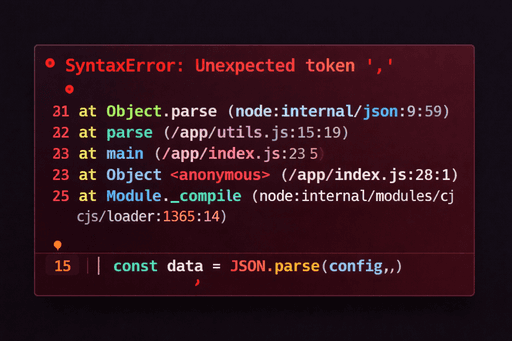
The most expensive mistake a mid-market CTO can make is treating technical debt like a maintenance issue rather than a financial liability. Across the B2B sector, we are seeing established companies actively hemorrhage enterprise contracts not because their product vision is flawed, but because their underlying architecture is buckling under its own weight. If your engineering team is spending more than 30% of their sprint cycles patching bugs on a monolithic legacy system, you are no longer building a product; you are operating a digital life-support machine.
The illusion of safety in a legacy system is rooted in the fear of migration downtime. Operations teams panic at the thought of a complete architectural overhaul, opting instead for temporary patches and bloated middleware to force old databases to talk to modern APIs. This strategy works—until it doesn't. When concurrent user limits hit their ceiling during a critical traffic surge, the localized patches fail simultaneously. This isn't just an engineering headache; it directly impacts your Annual Recurring Revenue (ARR). A system that crashes during an enterprise client onboarding instantly destroys trust that took your sales team months to build.
Transitioning from a fragile monolith to a resilient microservices architecture does not require the reckless "rip and replace" method that causes board-level anxiety. The modern standard is the strangler-pattern migration. By systematically decoupling the heaviest database queries—such as payment processing or real-time analytics extraction—and moving them into isolated, cloud-native environments, you can alleviate server pressure without taking the core product offline. You replace the foundation brick by brick while the building remains entirely functional.
At the highest level of growth, software stability is not a feature; it is the entire product. Investors and enterprise buyers scrutinize your tech stack just as heavily as your balance sheet. If your infrastructure cannot guarantee 99.99% uptime during hyper-growth, your valuation is artificially inflated. Stop rewarding engineering teams for putting out fires that shouldn't exist in the first place. Audit your codebase, isolate the friction points, and engineer a foundation that actually scales.