Operational Clarity for Complex Enterprise Teams

Your systems should keep up.

Logic Shift gives you the visibility, automation, and control to run cross-functional workflows at scale without adding another fragmented tool. Built for teams that have outgrown spreadsheets and disconnected point solutions.

Logic Shift gives you the visibility, automation, and control to run cross-functional workflows at scale without adding another fragmented tool. Built for teams that have outgrown spreadsheets and disconnected point solutions.

  • OPERATIONAL CLARITY

  • WORKFLOW AUTOMATION

  • CLEAN DATA FLOW

  • FASTER DECISION CYCLES

  • ENTERPRISE-GRADE CONTROL

Outcomes

What customers achieve with Logic Shift.

Hand holding vintage instant camera over table

40% reduction in manual reporting cycles

A mid-market operations team at Northline Logistics Group was caught in a destructive cycle of "spreadsheet stitching." Every week, leading up to the executive review, senior analysts were forced to halt strategic work to manually aggregate, clean, and format data from isolated silos. They needed a way to accelerate reporting velocity without inflating the budget by adding new headcount.

Hand holding house keys over euro banknotes and charts.

Zero to Launch: Fintech MVP with $5M AUM

Meridian Financial Services was suffering from a classic scaling bottleneck: structural data misalignment. Sales, Finance, Marketing, and Operations were all operating in isolation, pulling conflicting numbers from different software exports. Every end-of-month review devolved into a debate over whose spreadsheet was accurate, rather than a strategic planning session. This lack of a single source of truth caused a critical drop in data trust across the executive board. When leadership cannot trust the underlying metrics, decision-making paralyzes. They needed an immediate intervention to align their Revenue Operations (RevOps) and financial forecasting before the data silos completely derailed their quarterly planning.

long table with Eiffel chair inside room

Reaching measurable ROI in under 90 days

Arbor Industrial Systems was facing a critical mandate from their board: they needed immediate, justifiable business impact from their new platform investment. The organization had suffered through multi-year "digital transformations" in the past that drained budgets without delivering tangible results. Stakeholder skepticism was high, and the tolerance for another prolonged, expensive implementation was zero. They needed a deployment strategy that didn't just promise future value, but proved it within the first financial quarter. The objective was to engineer a hyper-focused implementation cycle that generated enough measurable Return on Investment (ROI) and internal momentum to justify a company-wide rollout.

gray metal building frame near tower crane during daytime

Eliminating system bottlenecks to handle 3x transaction volume

Vanguard Payments was experiencing the worst kind of growing pains: their technology could not keep up with their sales. After a successful Series B funding round and a massive marketing push, their core platform began to buckle under the weight of concurrent user transactions. The system was suffering from intermittent timeouts during peak hours, directly resulting in failed payments and furious enterprise clients. They were trapped in a cycle of reactive firefighting. The engineering team was spending 80% of their time patching immediate bugs, leaving no resources to actually build the features promised to investors. They needed an architectural overhaul that would stop the bleeding and prepare the infrastructure to handle a projected 300% increase in volume over the next year.

Hand holding vintage instant camera over table
40% reduction in manual reporting cycles

A mid-market operations team at Northline Logistics Group was caught in a destructive cycle of "spreadsheet stitching." Every week, leading up to the executive review, senior analysts were forced to halt strategic work to manually aggregate, clean, and format data from isolated silos. They needed a way to accelerate reporting velocity without inflating the budget by adding new headcount.

Hand holding house keys over euro banknotes and charts.
Zero to Launch: Fintech MVP with $5M AUM

Meridian Financial Services was suffering from a classic scaling bottleneck: structural data misalignment. Sales, Finance, Marketing, and Operations were all operating in isolation, pulling conflicting numbers from different software exports. Every end-of-month review devolved into a debate over whose spreadsheet was accurate, rather than a strategic planning session. This lack of a single source of truth caused a critical drop in data trust across the executive board. When leadership cannot trust the underlying metrics, decision-making paralyzes. They needed an immediate intervention to align their Revenue Operations (RevOps) and financial forecasting before the data silos completely derailed their quarterly planning.

long table with Eiffel chair inside room
Reaching measurable ROI in under 90 days

Arbor Industrial Systems was facing a critical mandate from their board: they needed immediate, justifiable business impact from their new platform investment. The organization had suffered through multi-year "digital transformations" in the past that drained budgets without delivering tangible results. Stakeholder skepticism was high, and the tolerance for another prolonged, expensive implementation was zero. They needed a deployment strategy that didn't just promise future value, but proved it within the first financial quarter. The objective was to engineer a hyper-focused implementation cycle that generated enough measurable Return on Investment (ROI) and internal momentum to justify a company-wide rollout.

gray metal building frame near tower crane during daytime
Eliminating system bottlenecks to handle 3x transaction volume

Vanguard Payments was experiencing the worst kind of growing pains: their technology could not keep up with their sales. After a successful Series B funding round and a massive marketing push, their core platform began to buckle under the weight of concurrent user transactions. The system was suffering from intermittent timeouts during peak hours, directly resulting in failed payments and furious enterprise clients. They were trapped in a cycle of reactive firefighting. The engineering team was spending 80% of their time patching immediate bugs, leaving no resources to actually build the features promised to investors. They needed an architectural overhaul that would stop the bleeding and prepare the infrastructure to handle a projected 300% increase in volume over the next year.

Scaling With Authority

We build the systems that handle their hyper-growth.

Capabilities

Built for how enterprise teams actually work.
Unified Data Layer

Role-Based Access

Real-Time Dashboards

Audit-Ready Compliance

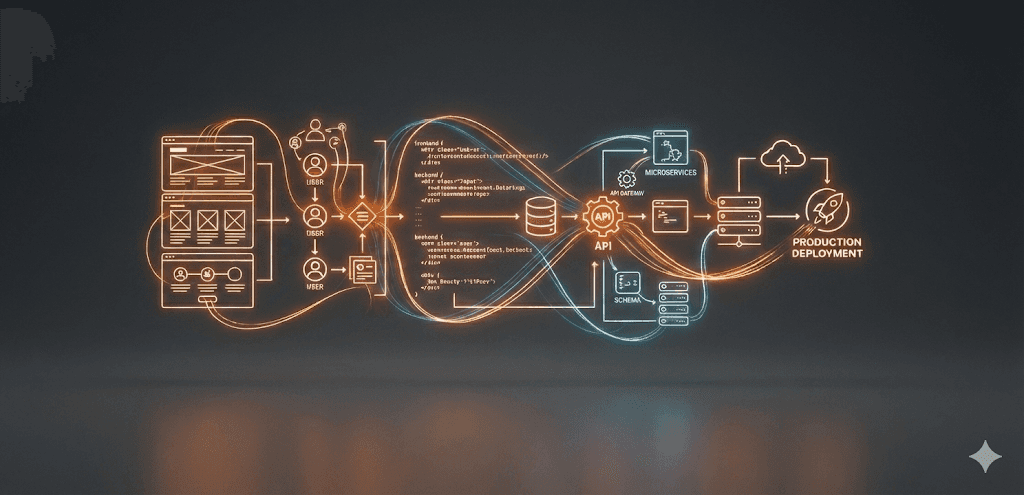
Frictionless Integrations Stop ripping and replacing software. We build unified data pipelines that ingest inputs from your existing CRM, ERP, and legacy tools without forcing a disruptive migration.

Unified Data Layer

Role-Based Access

Protect your data integrity. We deploy strict, role-based permissions (RBAC) so you control exactly who can view, edit, or extract sensitive metrics across the entire organizational hierarchy.

Real-Time Dashboards

Audit-Ready Compliance

Our Philosophy

Aesthetics cannot save a broken business model. We start by fixing the structural logic.

View from helicopter cockpit over coastal mountains

Most agencies disappear after the launch call. We don't. We embed accountability into every engagement by tying our work directly to the operational metrics that matter to your board: cycle time, error rate, and revenue velocity.

The Non-Negotiables:

— No juniors on your account.

— No opaque billing structures.

purple and blue light digital wallpaper

Most agencies disappear after the launch call. We don't. We embed accountability into every engagement by tying our work directly to the operational metrics that matter to your board: cycle time, error rate, and revenue velocity.

The Non-Negotiables:

— No juniors on your account.

— No opaque billing structures.

purple and blue light digital wallpaper
We don't sell hours. We sell the ruthless elimination of the operational friction that is actively costing your business revenue right now.
Speed to Value
Clearing The Air
Can you handle complex migrations from legacy tech stacks?

Yes. We execute data porting and architecture migrations systematically to prevent downtime. We don't trap you in a multi-month onboarding purgatory. We map the exact transition roadmap upfront so you spend less time migrating and more time actively closing.

How do you handle data integrity and regulatory compliance?

Security is not an add-on; it is hardcoded into the initial blueprint. We deploy strict Role-Based Access Control (RBAC) and engineer environments that are audit-ready for SOC 2 and GDPR standards. Your proprietary data never leaves isolated, encrypted environments.

How do you prevent scope creep and budget overruns mid-project?

We refuse to operate on vague estimates. Before any contract is signed, we conduct a ruthless discovery phase to define precise deliverables and technical boundaries. We price based on agreed outcomes, not billable hours. If the scope changes, the roadmap changes transparently—no hidden invoices, no surprise fees.

How steep is the adoption curve for non-technical teams?

We don't build software that requires a 50-page manual. If your operations team cannot navigate the interface natively on day one, we consider it a design failure. We strip away redundant feature-bloat and engineer workflows specifically for high-speed adoption, ensuring zero disruption to your daily output.

Will this infrastructure bottleneck when we hit hyper-growth?

No. We build on enterprise-grade architecture from the start. Our systems are load-tested to handle extreme concurrency, complex data governance, and localized compliance rules without latency spikes. You are investing in a foundation built for scale, not a temporary patch.


Insight

Insights, Guides & Industry Perspectives

turned-on MacBook Pro

Operational Infrastructure

The True Cost of Cheap Hardware: Why We Standardize on Apple Silicon.

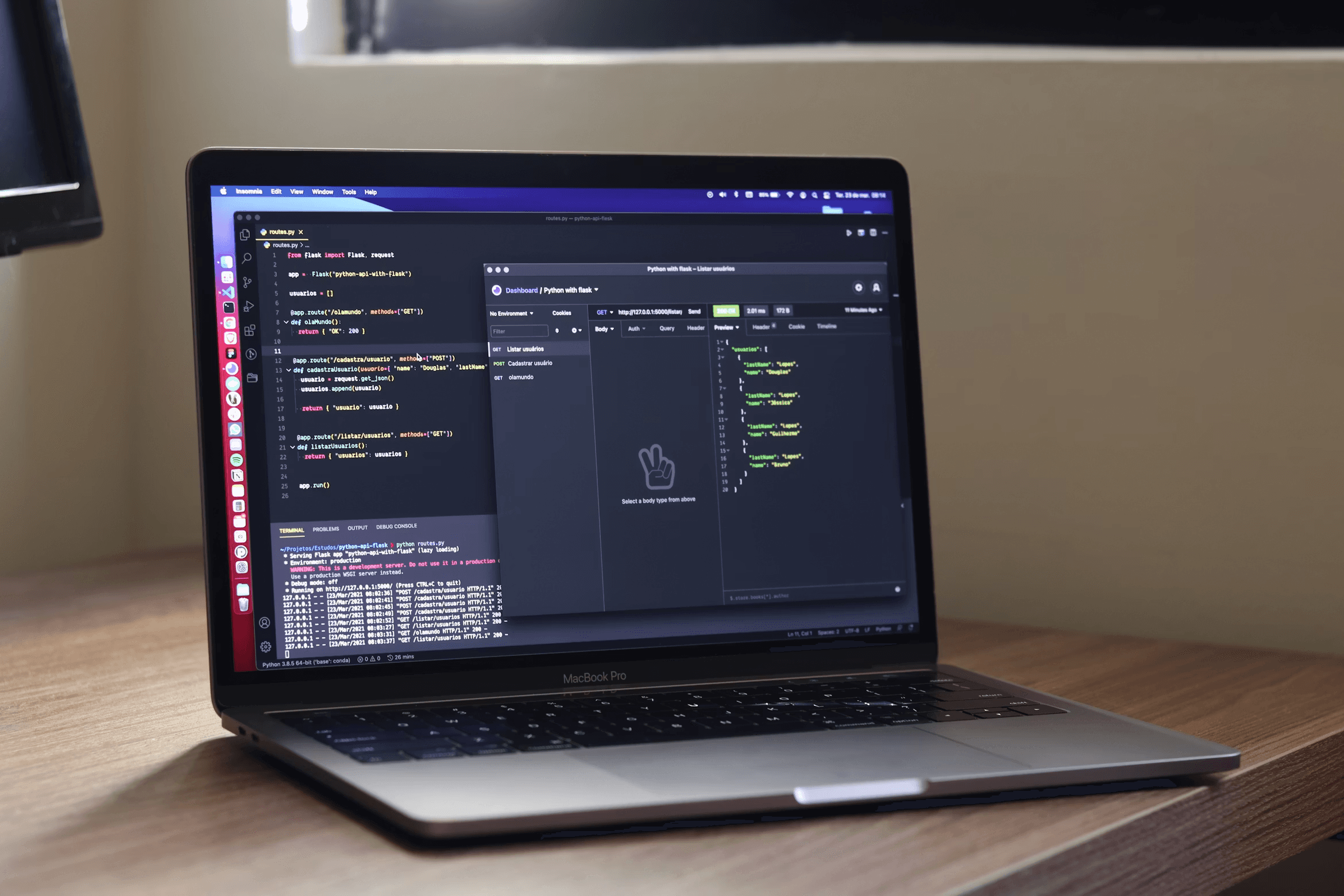
There is a false economy in enterprise IT procurement that actively throttles software development speed: outfitting highly paid engineers with underpowered machines to save a few hundred dollars upfront. When a company hires a senior developer for $150,000 a year but balks at spending $3,500 on a high-tier MacBook Pro, they are demonstrating a profound misunderstanding of Return on Investment (ROI). The most expensive asset in any tech-driven organization is not the hardware; it is human cognitive flow. Every time a build process takes an extra three minutes to compile, or a local Docker container crashes due to thermal throttling, you are paying your best talent to stare at a loading screen.

We mandate the latest Apple Silicon architecture for our entire engineering and design staff not out of brand loyalty, but out of ruthless operational efficiency. The transition to M-series chips eradicated the localized latency that used to plague cross-platform development. When rendering high-fidelity prototypes in Framer or running complex microservice architectures locally, the performance difference is not marginal—it is exponential. Our sprints are faster, our local testing is flawless, and the battery efficiency means our deployment velocity does not drop when our team is mobile. In our framework, hardware is treated as a force multiplier for execution, not a line-item expense.

Beyond raw processing power, hardware fragmentation creates hidden operational drag. When a dev team operates on a mix of legacy Windows machines, underpowered Chromebooks, and scattered Linux setups, troubleshooting environmental bugs becomes a full-time job. "It works on my machine" is the battle cry of a disjointed team. By standardizing on a uniform, high-performance UNIX-based OS like macOS, you eliminate the variance in local environments. Code behaves predictably across the entire team, making integration pipelines smoother and significantly reducing the friction during critical deployment phases.

If your agency or internal team is constantly missing deadlines, audit their tooling before you audit their skills. You cannot demand elite output while providing mediocre infrastructure. Treating high-end hardware as a luxury perk rather than a baseline requirement is a self-inflicted wound. Equip your team with the uncompromised power they need to iterate at the speed of thought, and the hardware will pay for itself in saved billable hours within the first financial quarter.

Feb 25, 2026

Artificially

Technology

turned-on MacBook Pro

Operational Infrastructure

The True Cost of Cheap Hardware: Why We Standardize on Apple Silicon.

There is a false economy in enterprise IT procurement that actively throttles software development speed: outfitting highly paid engineers with underpowered machines to save a few hundred dollars upfront. When a company hires a senior developer for $150,000 a year but balks at spending $3,500 on a high-tier MacBook Pro, they are demonstrating a profound misunderstanding of Return on Investment (ROI). The most expensive asset in any tech-driven organization is not the hardware; it is human cognitive flow. Every time a build process takes an extra three minutes to compile, or a local Docker container crashes due to thermal throttling, you are paying your best talent to stare at a loading screen.

We mandate the latest Apple Silicon architecture for our entire engineering and design staff not out of brand loyalty, but out of ruthless operational efficiency. The transition to M-series chips eradicated the localized latency that used to plague cross-platform development. When rendering high-fidelity prototypes in Framer or running complex microservice architectures locally, the performance difference is not marginal—it is exponential. Our sprints are faster, our local testing is flawless, and the battery efficiency means our deployment velocity does not drop when our team is mobile. In our framework, hardware is treated as a force multiplier for execution, not a line-item expense.

Beyond raw processing power, hardware fragmentation creates hidden operational drag. When a dev team operates on a mix of legacy Windows machines, underpowered Chromebooks, and scattered Linux setups, troubleshooting environmental bugs becomes a full-time job. "It works on my machine" is the battle cry of a disjointed team. By standardizing on a uniform, high-performance UNIX-based OS like macOS, you eliminate the variance in local environments. Code behaves predictably across the entire team, making integration pipelines smoother and significantly reducing the friction during critical deployment phases.

If your agency or internal team is constantly missing deadlines, audit their tooling before you audit their skills. You cannot demand elite output while providing mediocre infrastructure. Treating high-end hardware as a luxury perk rather than a baseline requirement is a self-inflicted wound. Equip your team with the uncompromised power they need to iterate at the speed of thought, and the hardware will pay for itself in saved billable hours within the first financial quarter.

Feb 25, 2026

Artificially

Technology

Hand holding vintage instant camera over table

Operations & Data Governance

Killing the Spreadsheet Culture: Why Data Silos Are Paralyzing Your Boardroom.

A fractured data ecosystem is the most reliable indicator of a stagnant enterprise. In organizations scaling beyond $20M ARR, we repeatedly see the same operational bottleneck: the "spreadsheet culture." Marketing relies on Hubspot, Sales lives in Salesforce, and Finance trusts only their ERP. Because these systems are rarely integrated with a unified logic, every department brings conflicting reports to the executive review. When leadership is forced to spend the first hour of a board meeting debating which spreadsheet contains the real numbers, strategic momentum instantly dies.

Data silos do not just cause arguments; they cause fatal delays in market response. If it takes your operations team two weeks of manual extraction and reconciliation to generate an accurate quarterly forecast, you are making decisions based on history, not reality. This latency allows leaner, more unified competitors to outmaneuver you. Furthermore, manual data porting introduces an unacceptable margin of human error. A single broken macro or mistyped cell in a localized report can trigger catastrophic misallocations of budget at the corporate level.

The solution is not to buy yet another dashboarding tool. Putting a beautiful UI over fundamentally fragmented data simply allows you to visualize your operational chaos faster. The actual fix requires establishing a rigid, cross-functional metric taxonomy. You must force the difficult alignment on what defines a specific data point across all departments, and then engineer an automated data pipeline—a single source of truth—that enforces those definitions at the point of extraction. No manual entry. No localized manipulation.

Operational velocity requires absolute data trust. When you eliminate the spreadsheet culture and deploy centralized data governance, you are not just saving your analysts hundreds of hours of manual labor. You are restoring the authority of your executive team. You transition from a reactive posture—constantly questioning the past—to a proactive posture, equipped to scale aggressively into the future with zero operational friction.

Feb 28, 2026

Artificially

Technology

Hand holding vintage instant camera over table

Conversion Architecture

Design for Revenue, Not for Awards. The Hidden Cost of Bad UX

There is a dangerous trend infecting B2B marketing: the obsession with hyper-creative, award-winning web design that actively sabotages user acquisition. Brands are pouring hundreds of thousands of dollars into immersive animations, complex scroll-jacking, and abstract navigation menus. The result is often a digital museum piece that impresses other designers but completely alienates the actual buyer. If a high-intent prospect cannot understand what you sell and how to buy it within five seconds of landing on your page, your design has failed its only financial mandate.

Friction is the silent killer of conversion rates. Every time you force a user to wait for a heavy WebGL animation to load, or bury your pricing structure behind a multi-step interactive accordion, you are artificially extending the buyer's journey. Cognitive load—the mental effort required to navigate your interface—must be minimized at all costs. Executive buyers do not have the patience to decode your clever metaphors. They are looking for clear value propositions, transparent integrations, and immediate proof of ROI. When you prioritize aesthetics over clarity, you aren't being innovative; you are just building roadblocks.

To engineer a high-converting B2B funnel, you must shift your perspective from "art direction" to "conversion architecture." This means stripping away every pixel that does not actively drive the user toward the next logical step. It involves implementing ruthless A/B testing on your calls-to-action, optimizing page load speeds for mobile compliance, and structuring your information hierarchy to answer objections before they are verbalized. True premium design is invisible; it removes the interface entirely and connects the user directly with the solution.

Your digital presence is the most scalable sales representative you employ. Stop measuring its success by the compliments it receives from your peers. Start measuring it by Customer Acquisition Cost (CAC), time-on-site, and pipeline velocity. If your current agency is pitching you "award-winning creativity" without guaranteeing a measurable lift in your baseline conversion metrics, it is time to fire them. You need an architecture built for revenue, not a canvas for their portfolio.

Feb 28, 2026

Artificially

Technology

Hand holding vintage instant camera over table

Engineering Strategy

Stop Patching Your Legacy Code. It’s Killing Your Valuation.

The most expensive mistake a mid-market CTO can make is treating technical debt like a maintenance issue rather than a financial liability. Across the B2B sector, we are seeing established companies actively hemorrhage enterprise contracts not because their product vision is flawed, but because their underlying architecture is buckling under its own weight. If your engineering team is spending more than 30% of their sprint cycles patching bugs on a monolithic legacy system, you are no longer building a product; you are operating a digital life-support machine.

The illusion of safety in a legacy system is rooted in the fear of migration downtime. Operations teams panic at the thought of a complete architectural overhaul, opting instead for temporary patches and bloated middleware to force old databases to talk to modern APIs. This strategy works—until it doesn't. When concurrent user limits hit their ceiling during a critical traffic surge, the localized patches fail simultaneously. This isn't just an engineering headache; it directly impacts your Annual Recurring Revenue (ARR). A system that crashes during an enterprise client onboarding instantly destroys trust that took your sales team months to build.

Transitioning from a fragile monolith to a resilient microservices architecture does not require the reckless "rip and replace" method that causes board-level anxiety. The modern standard is the strangler-pattern migration. By systematically decoupling the heaviest database queries—such as payment processing or real-time analytics extraction—and moving them into isolated, cloud-native environments, you can alleviate server pressure without taking the core product offline. You replace the foundation brick by brick while the building remains entirely functional.

At the highest level of growth, software stability is not a feature; it is the entire product. Investors and enterprise buyers scrutinize your tech stack just as heavily as your balance sheet. If your infrastructure cannot guarantee 99.99% uptime during hyper-growth, your valuation is artificially inflated. Stop rewarding engineering teams for putting out fires that shouldn't exist in the first place. Audit your codebase, isolate the friction points, and engineer a foundation that actually scales.

Feb 28, 2026

Artificially

Technology

LogicShift

+65 12345678
SUPPORT@LOGICSHIFT.COM
FAQ

Copyright © LogicShift 2026

Develop by ajf

LOGIC|S

+65 12345678
SUPPORT@LOGICSHIFT.COM
FAQ

Copyright © LogicShift 2026

Develop by ajf

LOGIC|S

+65 12345678
SUPPORT@LOGICSHIFT.COM
FAQ

Copyright © LogicShift 2026

Develop by ajf